Is a BCA Degree from a Private College in Nepal Worth the Money? A 2026 Reality Check
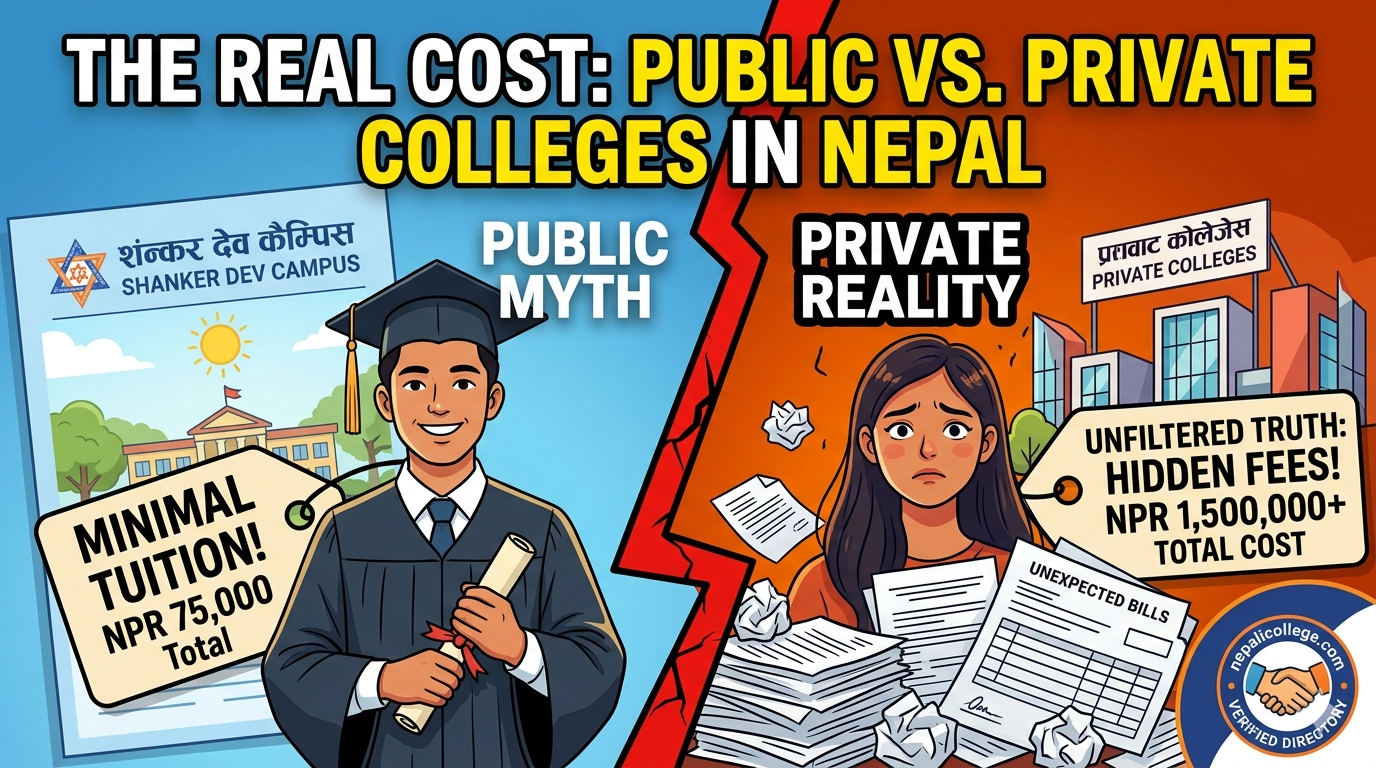
Let’s cut through the noise. You’re standing at a crossroads: drop NPR 8 lakhs on a private BCA college or scrape together NPR 3.5 lakhs for a government seat. In 2026, with Nepal’s IT sector booming but competition fiercer than ever, this isn’t just about money—it’s about your future ROI.
Yes, a private BCA can be worth it, but only if you play your cards right. Here’s the unfiltered truth.
The Real Cost Breakdown: Where Your Money Actually Goes
First, let’s talk numbers. In 2026, the gap between government and private BCA fees has widened:
- Government Colleges (TU Constituent Campuses): NPR 3.5–4.5 lakhs for four years. Think Patan Multiple Campus or Bhaktapur Multiple Campus. You’re paying for the bare minimum: basic labs, overcrowded classrooms, and a syllabus that moves at a glacier’s pace. But hey, the degree is the same.
- Private Colleges: NPR 7–12 lakhs. Top-tier names like Prime College, Thames International College, or Kantipur City College charge a premium for “facilities.” But what does that actually mean? Modern computer labs? Check. Industry guest lectures? Sometimes. Placement guarantees? Rarely.
Here’s the kicker: The syllabus is identical. Tribhuvan University dictates the curriculum for both. So why the 200% price hike? You’re paying for experience, not education. But is that experience worth going into debt?
BCA fee comparison Nepal 2026 private vs government
The Hidden Value: What Private Colleges Actually Deliver
Let’s debunk the myth that private colleges = better jobs. In 2026, Nepali IT recruiters don’t care if your degree says “Prime” or “Patan.” They care about one thing: Can you code?
That said, private colleges do offer tangible advantages—if you know how to leverage them:
- Flexibility for Freelancers: Colleges like International Center for Academics (ICA) offer Open and Distance Learning (ODL). This isn’t just a buzzword; it’s a game-changer. You can study at your own pace while interning at a startup or freelancing on Upwork. In 2026, 40% of BCA graduates earn their first income before graduation. Government colleges? Good luck getting leave for an internship.
- Infrastructure That Doesn’t Suck: Private labs have working computers, high-speed internet, and software licenses. Government campuses? You’re sharing one PC with five students and praying the power doesn’t cut out during a practical exam.
- Networking (If You’re Proactive): Top private colleges host hackathons, tech talks, and alumni meets. But here’s the catch: You have to show up. Sit in the back, skip events, and you’ve wasted your money.
BCA private college experience Nepal 2026
The Job Market Reality: Skills > College Name
Let’s get real. In 2026, a BCA graduate from a private college earns the same starting salary as one from a government campus: NPR 25,000–40,000/month. The difference? Private college grads might land jobs faster if they’ve built a portfolio during their studies.
Recruiters at companies like F1Soft, Leapfrog Technology, or Cotiviti don’t scan resumes for college names. They look for:
- GitHub profiles with real projects (not just college assignments).
- Internship experience (even unpaid ones count).
- Certifications in high-demand skills like React, Python, or AWS.
Here’s the hard truth: If you graduate from a private college with zero projects and no internships, you’re worse off than a government grad who spent four years grinding on freelance gigs.
BCA salary Nepal 2026 entry level
When a Private BCA is a Smart Investment (and When It’s Not)
✅ Go Private If:
- You Need Flexibility: You’re already freelancing, working part-time, or planning to start a venture. ODL programs let you earn while you learn.
- You’re Self-Driven but Need Structure: Private colleges force attendance, deadlines, and regular exams. If you’re the type to procrastinate, this push might save you.
- You Can Access Scholarships: Many private colleges offer 20–50% scholarships for merit or marginalized groups. Do the math: NPR 4 lakhs with a scholarship beats NPR 3.5 lakhs with no support.
❌ Avoid Private If:
- You’re Taking a Loan: Starting your career with NPR 6 lakhs in debt is a nightmare. Entry-level salaries won’t cover EMIs + living expenses.
- You Expect Placements on a Silver Platter: No college will “place” you. You hustle, you win.
- You Can Get Into a Top Government Campus: If you’ve got the grades for Nepal Commerce Campus or Amrit Campus, take it. Invest the saved money in certifications, not fees.
The Verdict: It’s Not the College, It’s You
Here’s the 100% truth: Your BCA degree is just a ticket to the interview room. What happens next depends on you. In 2026, I’ve seen private college grads earning NPR 1 lakh/month by age 22, and government grads stuck in NPR 25k roles for years. The difference? One group coded daily, built networks, and chased opportunities. The other just showed up to class.
If you choose private, treat it like a business investment. Demand value: internships, mentorship, and real-world projects. If you choose government, compensate with self-study, online courses, and relentless networking.
The University Dilemma: TU vs. POU vs. PU (Does the Affiliation Matter?)
Best IT Course in nepal.view
When choosing a private college, you aren’t just choosing a building; you are choosing a university affiliation. In Nepal, private BCA colleges generally fall under Tribhuvan University (TU), Pokhara University (PoU), or Purbanchal University (PU).
If you are paying private-college money, you need to look closely at their exam schedules and academic calendars. TU has historically faced criticism for exam and result delays—sometimes stretching a 4-year degree into 4.5 or 5 years. If you are paying NPR 8 lakhs, losing an extra year to administration costs you potential salary. PoU and PU tend to run on stricter, more predictable semester cycles. Ask senior students at the college about their current exam backlog before signing the admission papers.
The Self-Study Budget: The Extra Costs Nobody Warns You About
Let’s dismantle a huge misconception: your college fees do not cover everything you need to become employable. Whether you go private or government, the TU/PoU curriculum is heavily theoretical and outdated for the 2026 tech landscape. To get that NPR 40,000/month starting job, you will have to pay out-of-pocket for real-world skills.
When planning your budget, set aside an extra NPR 30,000 to 50,000 for your four years of study to cover:
- Premium Learning Platforms: Udemy courses, Coursera certificates, or a LeetCode premium subscription for technical interview prep.
- Cloud Credits: Deploying your web apps or projects on AWS, Azure, or DigitalOcean so recruiters can see live, working versions of your code.
- Tech Events & Travel: Entry tickets to local tech conferences, hackathons (like those hosted by tech communities in Kathmandu), and workshops.
How to Audit a Private College Before Handing Over the Cash
Do not trust the shiny brochures or the smooth-talking admissions counselors who promise “100% placement.” If you are going to invest close to a million rupees, you need to do a hard audit of the college yourself.
Take one afternoon, walk onto the campus unannounced, and do these three things:
- Check the Lab Infrastructure Personally: Ask to see the computer labs. Are the machines modern enough to run heavy IDEs (like Android Studio or VS Code) and Docker containers smoothly, or are they outdated dual-core systems?
- Corner the 6th or 7th Semester Students: Find the seniors hanging out near the canteen. Ask them the brutal questions: Are the teachers actual industry developers or just fresh graduates reading from slides? Does the college actively help secure internships, or are you on your own?
- Audit the Faculty’s GitHub Profiles: Don’t look at their academic degrees. Look at the names of the core IT faculty and look them up on GitHub or LinkedIn. If your programming professors haven’t pushed code to a real project in the last three years, they cannot teach you how to survive in the 2026 market.
Final Advice: Don’t ask, “Is private BCA worth it?” Ask, “Am I willing to do what it takes to make it worth it?” Because in Nepal’s IT boom, the only degree that matters is the one you build for yourself.