Talk to any +2 Science graduate in Nepal right now, and half of them will tell you they are planning to join BSc.CSIT. It has quickly become the go-to degree if you want to break into the tech industry, build software, or get a remote job that pays well.
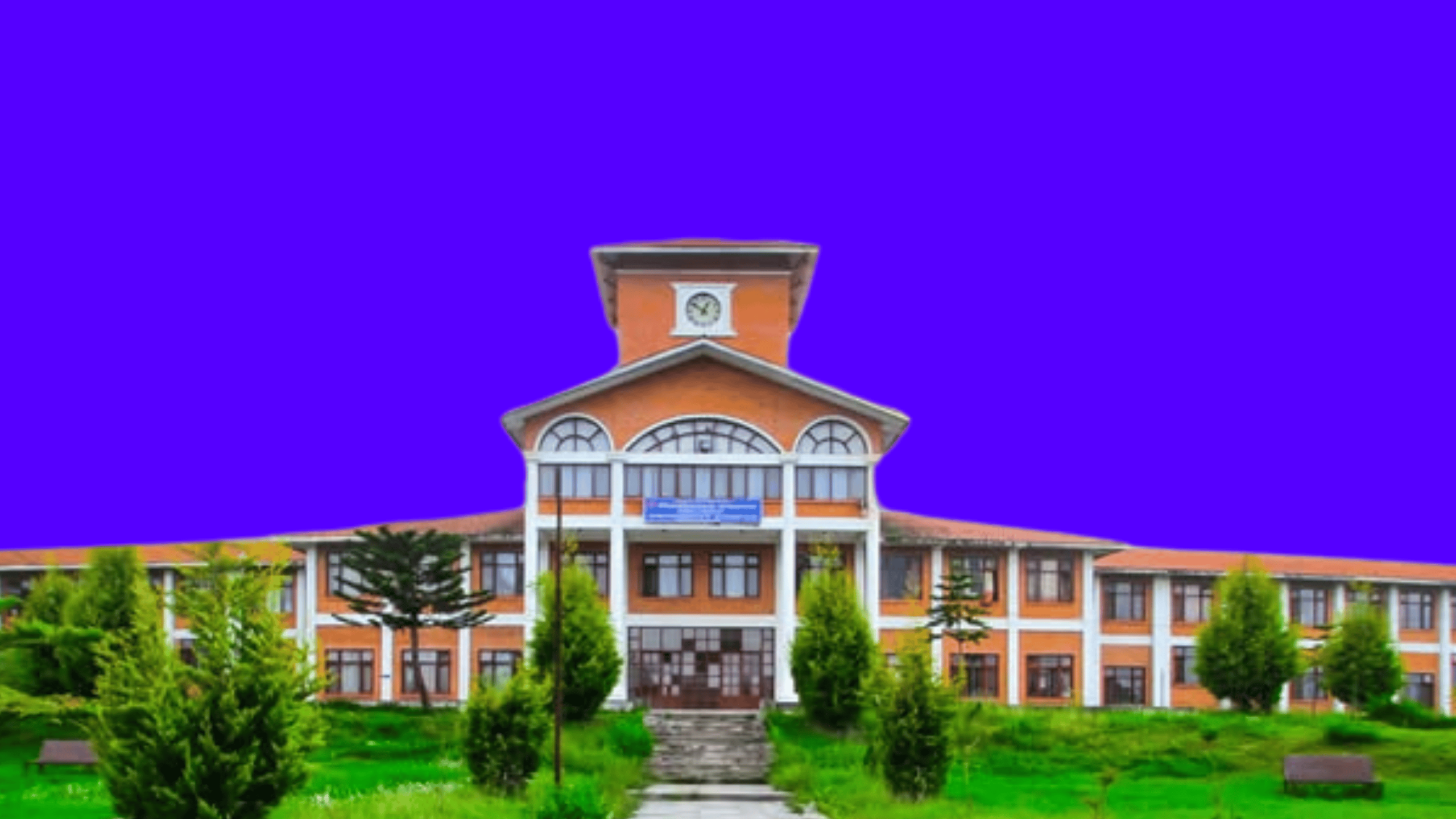
Because Tribhuvan University (TU) runs this course, it comes with a lot of academic weight and prestige. But if you talk to seniors who are currently in their third or fourth semester, you will hear a completely different story. They are usually stressed about back exams, struggling with abstract theories, and wondering why they have to learn so much mathematics just to write a piece of code.
If you are trying to figure out if you should fill out that admission form or look for an easier option, let’s look at the actual reality of studying BSc.CSIT in Nepal.
The Core Philosophy: You’re Studying Science, Not Just Coding
The biggest mistake students make is assuming BSc.CSIT is a vocational software training course. It is not. It is a pure science degree.
There is a massive difference between learning how to use a technology and learning how that technology works at a fundamental level:
- A basic IT course might teach you how to write code to build a mobile app.
- BSc.CSIT forces you to learn how a computer compiler translates that code into binary, how data structures arrange themselves inside physical RAM, and how operating systems handle processing queues.
You will spend a lot of time on computation theory, discrete structures, and algorithms. If your only goal is to learn the basics of web development or digital marketing so you can start working immediately, the deep theoretical focus of CSIT might feel like an uphill battle. But if you want to build a career in artificial intelligence, cryptography, or core system design, this deep knowledge is exactly what gives you an edge.
The Real Hurdle: The Mathematics
Let’s talk about the main reason students fail their board exams in the first couple of years: Mathematics.
Many join CSIT thinking they will be writing code on laptops from day one, only to find themselves staring at a whiteboard full of advanced calculus equations.
What the Math Timeline Looks Like:
▒▒▒▒▒▒▒▒▒▒▒▒▒▒▒▒▒▒▒▒▒▒▒▒▒▒▒▒▒▒▒▒▒▒▒▒▒▒▒  Semesters 1 & 2 (Calculus, Linear Algebra)
▒▒▒▒▒▒▒▒▒▒▒▒▒▒▒▒▒▒▒▒▒▒▒▒▒▒▒▒▒▒▒▒
Semesters 3 & 4 (Discrete Structure, Statistics)
▒▒▒▒▒▒▒▒▒▒▒▒▒▒▒▒▒▒▒▒
Semesters 5+ (Numerical Methods, Cryptography Logic)
You cannot avoid math in this course. From matrix transformations to probability theory and discrete proofs, the syllabus expects you to have a strong logical mindset. If you struggled through your +2 Science math exams or absolute detest solving long equations, you will need to put in double the effort here. It isn’t just about memorizing steps; you have to understand the logic, or the university board exams will catch you off guard.
Getting In: The Entrance Filter
Because the demand for this course is so high, you can’t just pay a college fee and secure a seat. TU keeps a strict filter in place:
- The +2 Science Requirement: You must come from a science background (Physics and Mathematics) with decent grades.
- The TU Entrance Exam: This is where the real competition happens. It’s a timed, multiple-choice test covering Physics, Chemistry, Math, and English.
Your rank in this entrance exam determines your entire trajectory. If you score near the top, you can land a highly subsidized seat at government constituent campuses like ASCOL, Patan Multiple Campus, or the Central Department at Kirtipur, where the entire four-year degree costs a fraction of what private colleges charge. If your rank is lower, you will have to look at private affiliated colleges where the fee structures are significantly higher.
Job Market and Salaries: Is the Stress Worth It?
If you can handle the math and survive the heavy theory semesters, the career outlook in Nepal is solid.
Local tech companies and international development agencies look favorably on CSIT grads. They know a student who survived a TU science degree has strong problem-solving skills and can pick up new programming languages quickly.
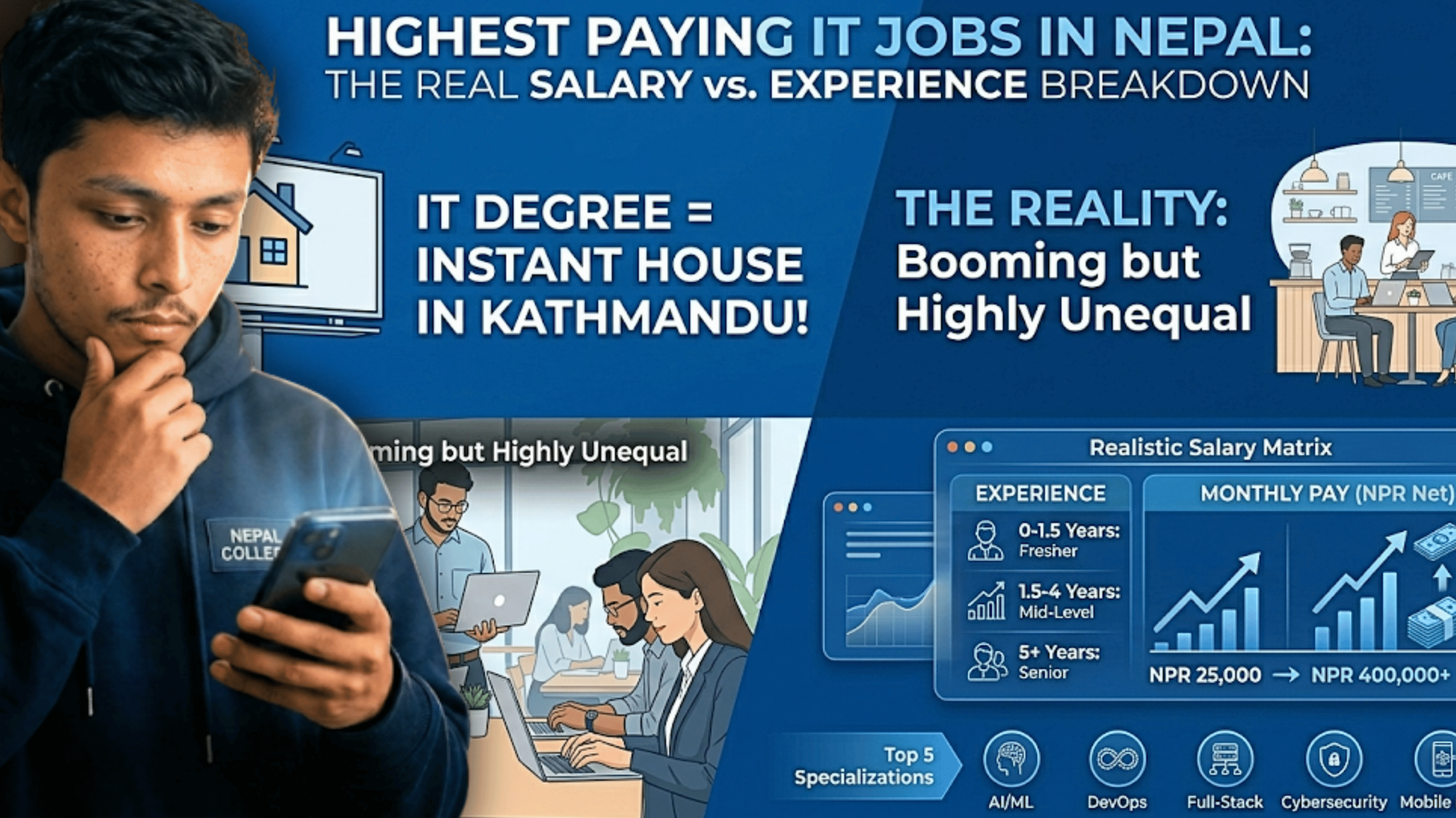
- Starting Salaries: Fresh grads usually start between
NPR 30,000 and 50,000per month, depending entirely on what they built outside of their college syllabus. - Mid-to-Senior Roles: Experienced engineers can make anywhere from
NPR 1,500,000 to 2,500,000+a year locally. - The Remote Route: A lot of senior developers in Kathmandu skip local companies entirely. They use their strong engineering foundations to land remote jobs for companies in the US, Europe, or Australia, earning directly in USD while staying in Nepal.
The Honest Conclusion: Is It Right For You?
- Skip BSc.CSIT if: You hated your +2 math classes, want a relaxed college experience with plenty of free time, or just want a basic degree certificate so you can apply for a visa to go abroad as quickly as possible.
- Choose BSc.CSIT if: You genuinely enjoy logic puzzles, want to understand how software works under the hood, are ready to study hard for university board exams, and want a respected degree that holds its weight in the tech market.
Making your final list of colleges? Don’t make a blind guess based on advertisements. Head over to nepalicollege.comto check the latest entrance exam syllabus, compare real fee structures for private vs. government colleges, and read honest feedback from current students.