Rote learning vs conceptual understanding in Nepal
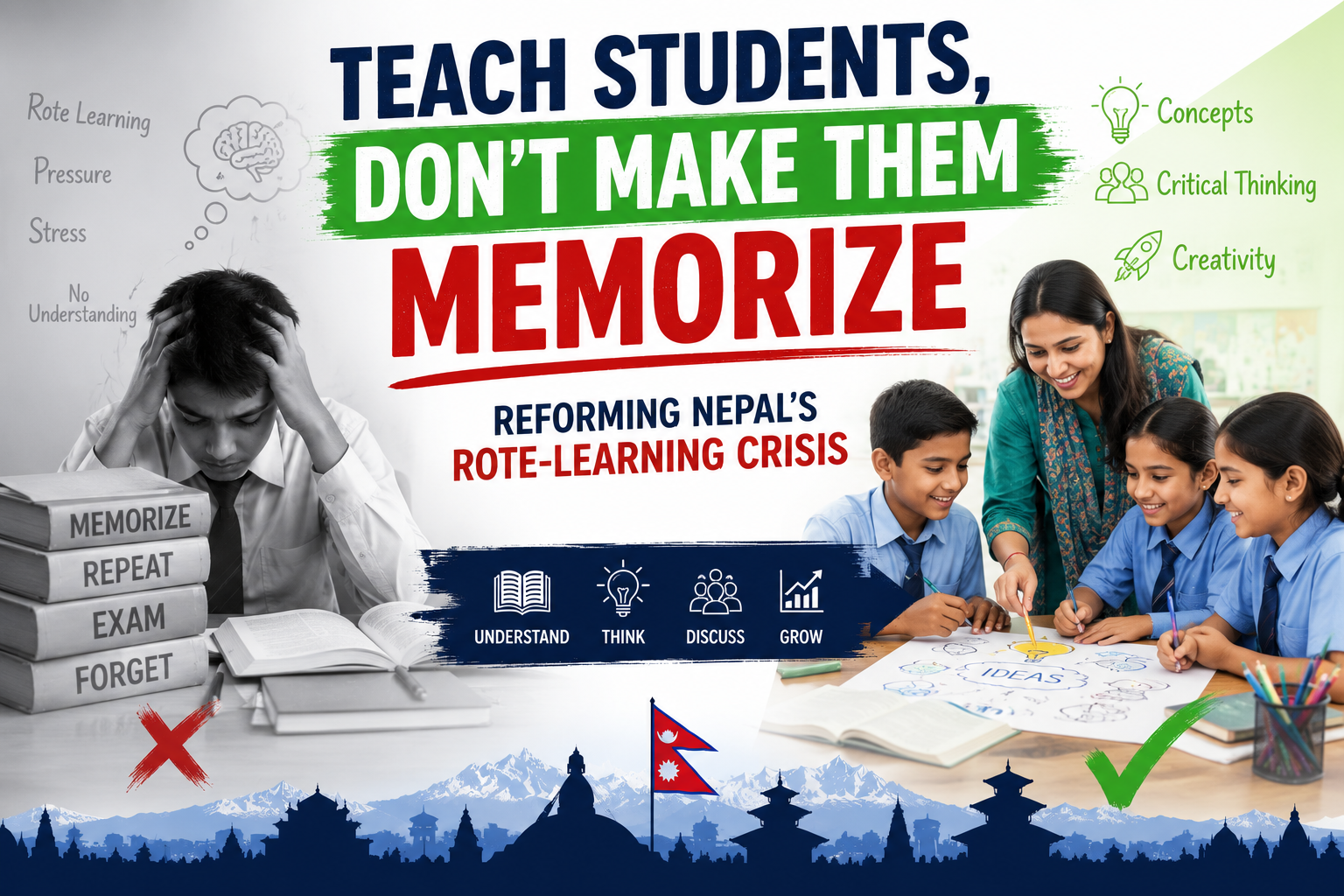
If you walk past a student's room at 5:00 AM, you will hear them reading aloud, repeating exact sentences from their textbook again and again. They are not trying to grasp the concept's deeper meaning; they are focused on memorizing the exact words to write them down on an answer sheet later that day.
This practice is called Rote Learning (Ghoke 'घेोके' Vidya 'विद्या '). While this method may help a student pass their exams and earn a high GPA, it is quietly harming their future.
The Heavy Price of "Ghoke Vidya"
When we prioritize memory over understanding, we create three major systemic crises:
- The Total Destruction of Creativity: Rote learning actively penalizes original thinking. If a student tries to explain a scientific law or an economic principle in their own everyday words, they are frequently marked down by examiners who demand the exact wording from the guide book. This conditions young minds to stop asking "why" and simply accept "what."
- The Illusion of Temporary Knowledge: What is memorized without being understood has a incredibly short shelf life. Most students completely forget the core formulas and concepts of their previous semesters within two weeks of leaving the examination hall. This isn't true education; it’s just data storage and disposal.
- An Unemployed Workforce Holding Degrees: This is the most painful consequence. Nepal's job market is flooded with young graduates who boast straight A or A+ certificates but struggle to write a cohesive business email, debug a real software program, or manage an entry-level inventory system. They have the certificates, but they lack the practical, functional skills that companies actually pay for.
The Age-Based Blueprint for True Learning
Fixing this crisis doesn't just happen inside the university(TU,KU,PU,etc) halls; it starts at home with how parents talk to, discipline, and encourage their children. The human brain changes drastically as it grows, and our teaching and parenting methods must evolve alongside it.
THE THREE STAGES OF STUDENT DEVELOPMENT
Phase 1: Up to 5 Years    -> Affection, Safety, & Total Care
Phase 2: 6 to 12 Years    -> Values, Basic Discipline, & Habits
Phase 3: 15+ Years (Teen) -> Mutual Friendship & Respect
Phase 1: Up to 5 Years Old (The Foundation of Emotional Security)
At this young age, a child’s brain absorbs emotions more than information. They shouldn’t feel pressured to memorize long lists of vocabulary or numbers. What they really need is plenty of love, affection, and a strong sense of safety. Scolding, yelling, or frightening a toddler creates emotional stress that can hinder their natural curiosity for years.
Phase 2: From 6 to 12 Years Old (The Structural Phase)
During this time, children pay close attention to how the world, society, and family relationships work. It’s the best moment to introduce basic life rules, values, discipline, and healthy habits. Instead of forcing them to memorize abstract ideas, involve them in practical math, like figuring out change at the grocery store, or basic science, like watching how plants grow in the garden.
Phase 3: Above 15 Years Old (The Friendship Shift)
When adolescence begins, traditional parenting styles often fail. If parents keep scolding, micromanaging, or mocking a teenager's academic decisions, the child will distance themselves emotionally.
At this point, parents need to shift from being authority figures to trusted friends. When teenagers feel that their choices and boundaries are respected at home, they build the emotional strength needed for effective studying. Without this respect, young adults risk academic burnout, deep depression, or turning to harmful habits for validation.
The Summary: Real education is what remains after you have forgotten everything you memorized for an exam. Let’s stop building human recorders and start cultivating critical thinkers.