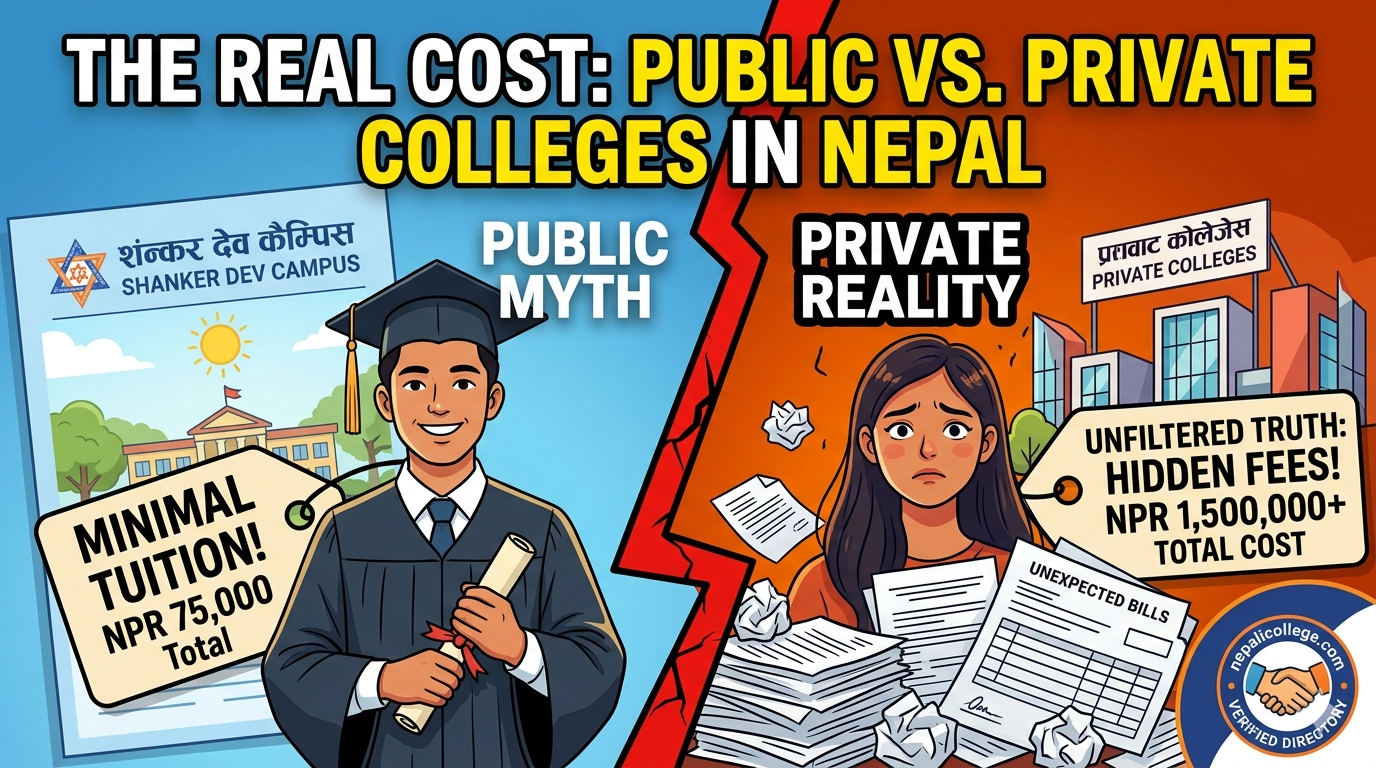
Let’s cut through the marketing fluff. If you’re looking at BCA colleges in Nepal this year, you’ve probably seen brochures promising “world-class education” with price tags that vary wildly. Why does one college charge NPR 3.5 lakhs while another asks for NPR 12 lakhs for the exact same Tribhuvan University degree? BCA college fees in Nepal TU cost
As someone who has analyzed admission data and spoken to hundreds of students in 2026, I’m going to give you the unfiltered financial reality. This isn’t just about tuition; it’s about where your money actually goes and whether the extra cost buys you a better future.
Best IT Course In Nepal
The Sticker Price: Government vs. Private in 2026
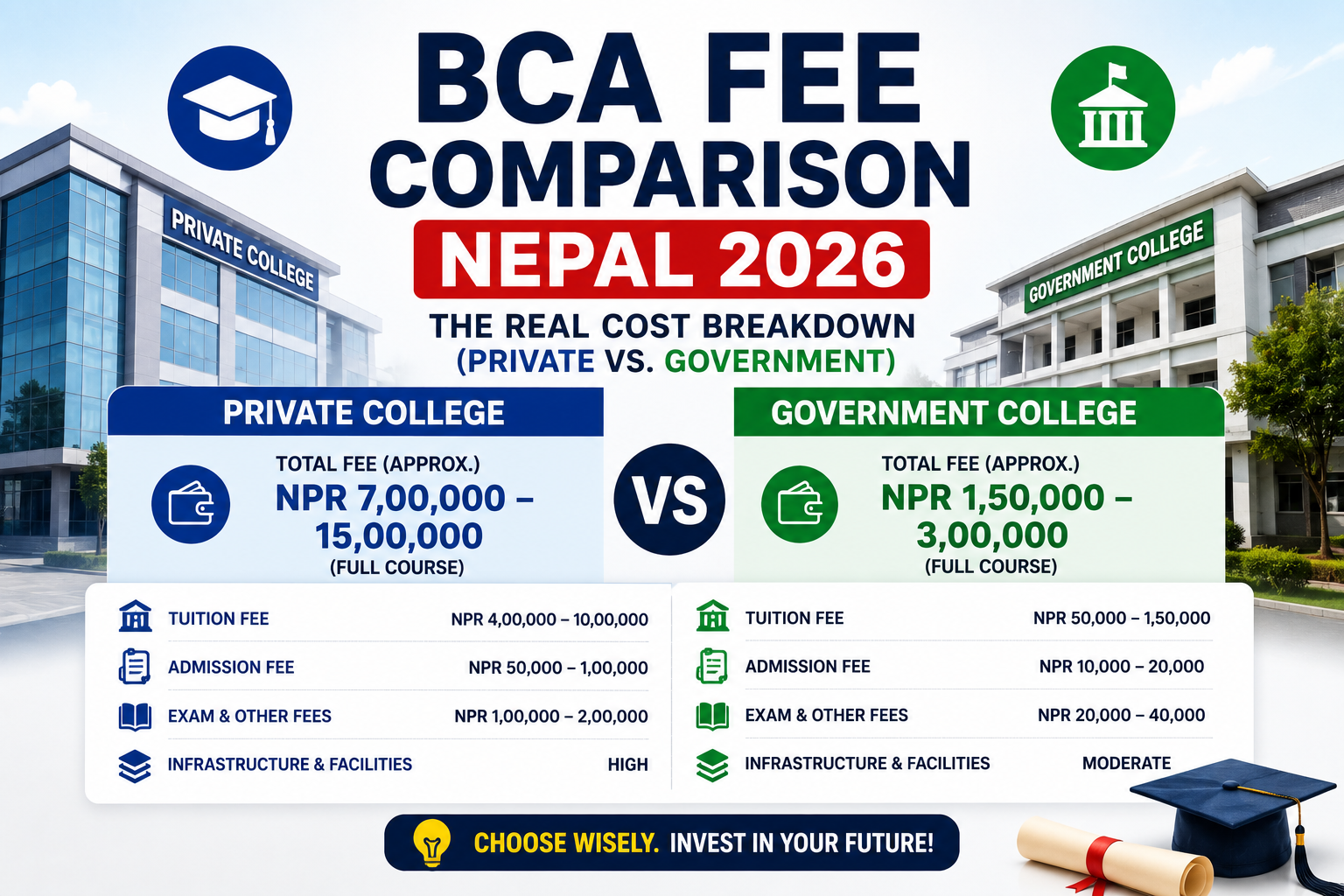
The gap between government and private college fees has never been wider. Here is the raw data for the full four-year BCA program under Tribhuvan University (TU):
Government (Constituent) Campuses
- Total Cost: NPR 3.5 lakhs to 4.5 lakhs.
- Examples: Patan Multiple Campus, Bhaktapur Multiple Campus, Nepal Commerce Campus.
- The Reality: You are paying for the syllabus and the degree. Nothing more. Classes are crowded, labs are often outdated, and the academic calendar can be erratic due to strikes or administrative delays. But the degree you get at the end is 100% valid and recognized everywhere.
Private Affiliated Colleges
- Total Cost: NPR 7 lakhs to 12 lakhs+.
- Examples: Prime College, Thames International College, Kantipur City College.
- The Reality: You are paying for infrastructure, “management,” and flexibility. Top-tier private colleges justify this with air-conditioned labs, consistent class schedules, and industry guest lectures. However, mid-tier private colleges often charge near-premium rates for facilities that are barely better than government ones.
Is Private BCA College in Nepal Worth It?
The Hidden Costs Nobody Tells You About
The tuition fee is just the entry ticket. In 2026, students often get blindsided by “hidden” expenses that can add NPR 50,000 to 1 lakh to your total bill.
- University Exam & Service Charges: Every semester, you pay exam fees (approx. NPR 2,500–3,000) and service charges to TU. Over 8 semesters, this adds up to nearly NPR 40,000 regardless of your college type.
- Project & Internship Costs: Your final year project isn’t free. Printing, binding, server costs, and sometimes paying for external mentorship can cost NPR 15,000–20,000.
- Study Materials: While government colleges often rely on outdated library books, private colleges might push you to buy specific (often expensive) textbooks or licensed software subscriptions.
- Retake Fees: If you fail a paper (which happens), private colleges sometimes charge a “re-exam management fee” on top of the university fee.
Pro Tip: Always ask the admission counselor for a written breakdown of “all inclusive” costs. If they hesitate, assume there are hidden fees.
hidden costs BCA Nepal student experience
Scholarships: The Great Equalizer?
Here is where the math gets interesting. Government colleges rarely offer scholarships because the fees are already subsidized. However, private colleges use scholarships as a major recruitment tool in 2026.
- Merit Scholarships: Many private colleges offer 20% to 50% off tuition for students with high GPAs in +2 or top scores in the TU entrance exam. Some even offer 100% waivers for the top 1–2 rankers.
- Need-Based Aid: Institutions like Divya Gyan College and Thames College have specific quotas for financially disadvantaged students.
- The Strategy: If you can secure a 50% scholarship at a top private college, your fee drops to ~NPR 4–5 lakhs. Suddenly, you’re getting private infrastructure for nearly the same price as a government degree. Always apply for the scholarship entrance exams; even if you don’t get full waiver, a 20% discount saves you NPR 1.5 lakhs.
BCA scholarship options private colleges Nepal 2026
ROI Analysis: Is the Extra 5 Lakhs Worth It?
Let’s do the math. If you choose a private college, you are likely paying NPR 4–6 lakhs more than a government student. Is this investment worth it?
Yes, IF:
- You Value Time: Private colleges rarely have strikes or delayed exams. You graduate in exactly 4 years. In government campuses, delays can stretch your degree to 5+ years, costing you a year of salary (opportunity cost).
- You Need Flexibility: If you plan to work or freelance while studying, private colleges are far more lenient with attendance and scheduling. This allows you to earn money during your degree, offsetting the higher fees.
- Infrastructure Matters to You: If you learn best with modern tools, reliable internet, and a quiet environment, the private college premium buys you a better learning ecosystem.
No, IF:
- You Are Self-Disciplined: If you can code on your own laptop, learn from online resources (Coursera, YouTube), and don’t need a professor to hold your hand, a government college is the smarter financial move.
- You Are Taking a High-Interest Loan: Starting your career with NPR 8 lakhs in debt is dangerous. Entry-level IT salaries in Nepal (NPR 25k–40k) will struggle to cover EMIs and living expenses.
The 20% Mark Variance Trap: Why Internal Marks Drop
Many students choose private IT colleges assuming that higher tuition fees buy lenient internal marks. However, Tribhuvan University (TU) enforces a brutal 20% Variance Rule in its semester evaluation bylaws. While it protects academic integrity, it easily crushes careless students.
The Rule: If your internal assessment score is greater than 20% higher than the score you achieve on the final external board exam for that exact same subject, the university software flags it as artificial inflation.
When this flag triggers, TU automatically scales down your high internal marks to match your actual external exam performance.
- The Reality Check: If a private college hands you a comfortable 19/20 internally out of favoritism, but you panic and score a 10/20 on the board exam, your internal grade gets retroactively slashed by the university.
- The Takeaway: You cannot simply “buy” a high GPA through private internal marks. Your final board exam performance ultimately dictates the validity of your internal standing.
The Passing Split: The Individual Section Hurdles
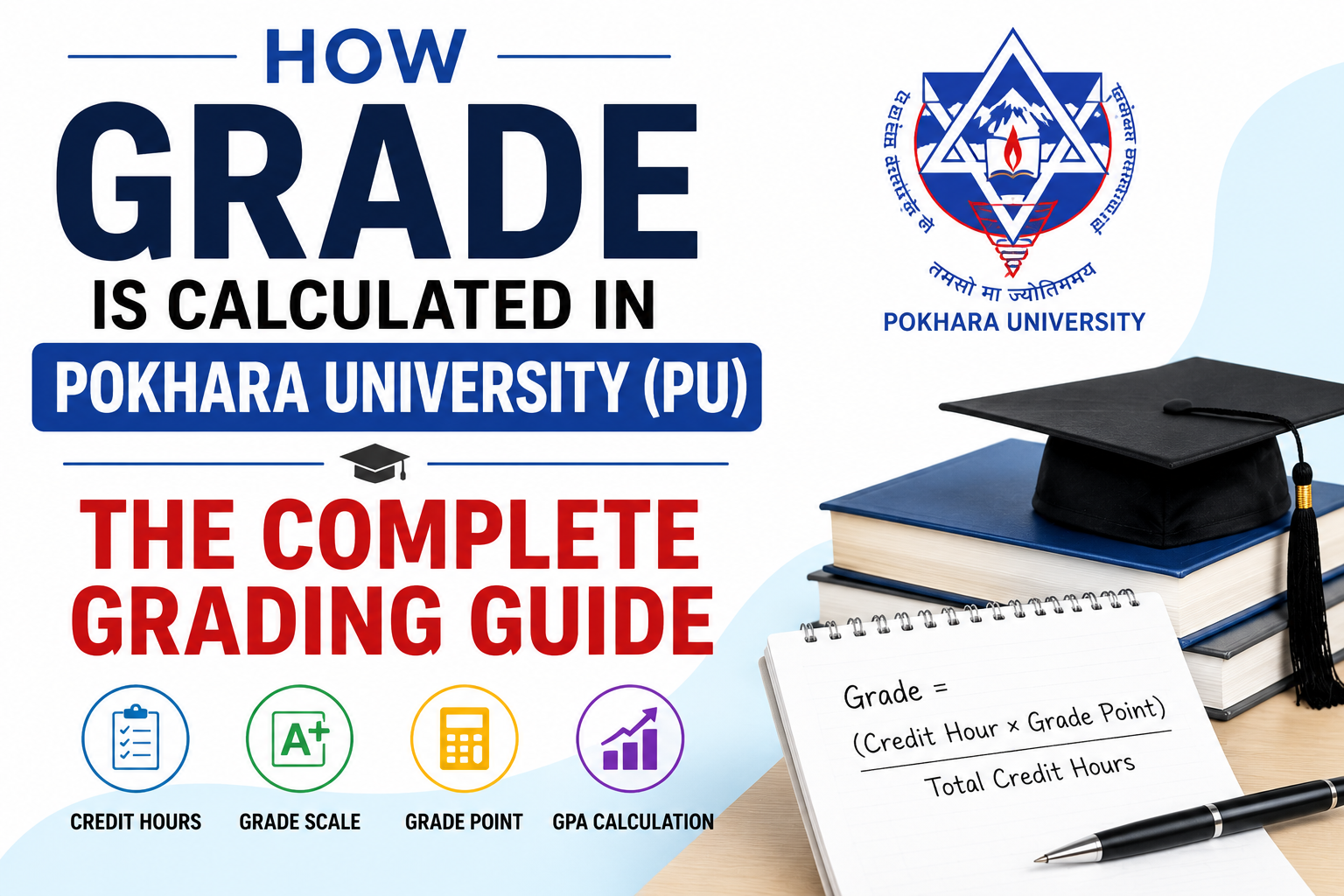
When calculating the return on investment (ROI) of your degree, you must understand exactly how the passing structure works so you don’t waste money on costly repeat semesters. For a standard TU BCA course with a laboratory component, your grade is divided into three distinct buckets.
TU BCA Mark & Passing Distribution
| Assessment Type | Weight Coverage | Maximum Marks | Minimum Pass Hurdle (40%) |
| Internal Assessment | 20% | 20 Marks | 8 Marks |
| Lab / Practical Work | 20% | 20 Marks | 8 Marks |
| External Board Exam | 60% | 60 Marks | 24 Marks |
The Kicker: No Collective Passing
To clear any subject, you must secure a minimum of 40% individually within each separate category listed above, alongside an overall composite grade of C+ (Grade Point 2.3) in the final compilation.
If you get a perfect score in your practicals and internals but land below 40% (less than 24 marks) on the theoretical board paper, you fail the entire course.
Failing a single subject slaps an “F” on your report card and completely tanks your Semester Grade Point Average (SGPA). While private colleges offer functional labs to help you maximize that 20% practical bracket, they cannot save you if you fail to cross the line on the final printed board exam sheet.e “F” completely tanks your Semester Grade Point Average (SGPA).
While private colleges offer functional labs to maximize that 20% practical bracket, they cannot save you if you fail to cross the 40% individual hurdle on the final printed board exam sheet.
Remember, in Nepal’s IT sector, no recruiter asks how much you paid for your degree. They ask what you can build. Whether you pay 3 lakhs or 10 lakhs, the degree paper is the same. The difference lies in how you use the four years to build your portfolio.